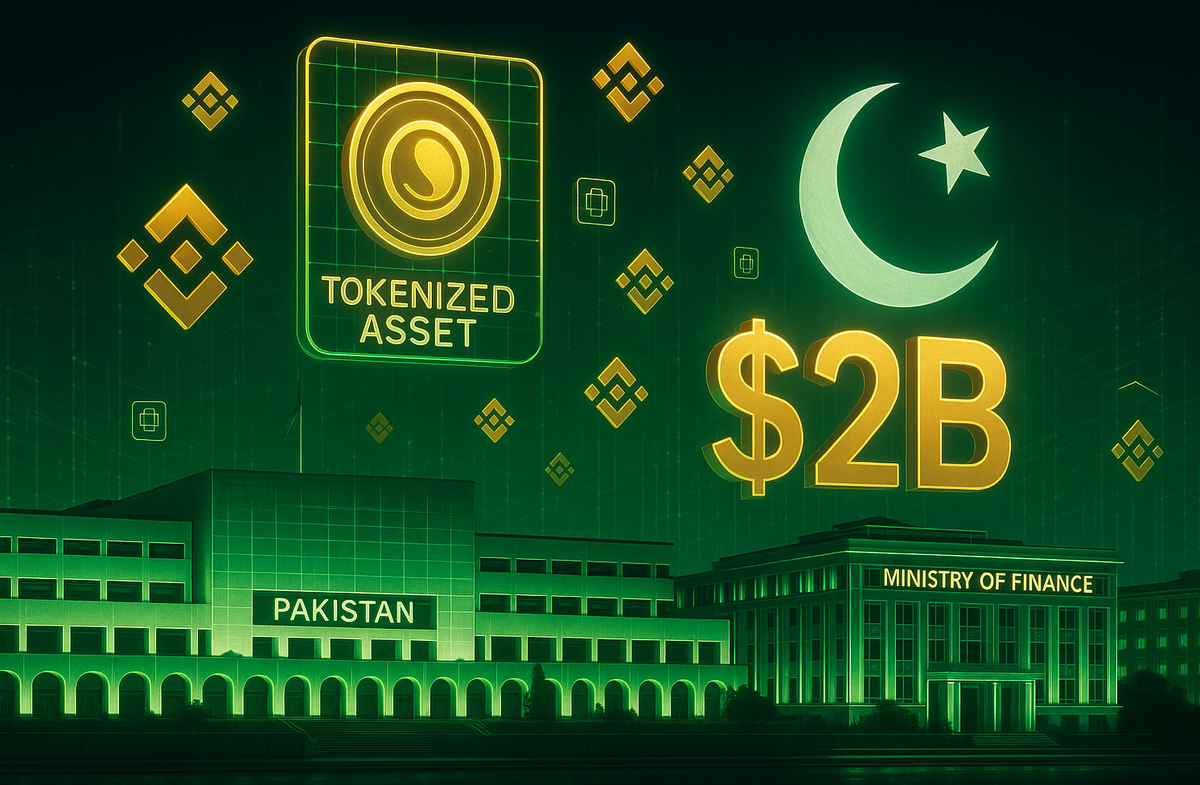
Pakistan Signs MoU With Binance to Explore Tokenization of $2B Sovereign Assets
Government of Pakistan officially signs an MoU with Binance to explore tokenizing up to $2B in sovereign and real-world assets, opening a new chapter in Crypto Pakistan’s regulated digital economy.

Pakistan has taken a decisive step toward modernizing its financial markets by signing a Memorandum of Understanding (MoU) with Binance Investments Co., Ltd., one of the world’s largest blockchain and digital asset companies. The agreement paves the way for exploring tokenization and blockchain-based distribution of Pakistan’s real-world and sovereign assets, a move that could redefine capital market access for global investors.
The MoU was signed at the Finance Division in Islamabad by Senator Muhammad Aurangzeb, Federal Minister for Finance and Revenue, and Richard Teng, CEO of Binance, in the presence of Mr. Changpeng Zhao (CZ), Advisor to the Pakistan Crypto Council. The event marks one of Pakistan’s strongest signals yet toward embracing digital finance and emerging technologies.
Under the framework, Pakistan and Binance will evaluate the feasibility of tokenizing key national assets, including government bonds, treasury bills, commodity reserves, and other federally owned instruments. Subject to regulatory approvals, the initiative may extend to assets worth up to USD 2 billion, aiming to boost transparency, market liquidity, and global investor participation.
The collaboration includes potential support from Binance and its affiliates in the form of technical expertise, advisory services, training, and capacity building. This assistance will help Pakistan assess compliant blockchain infrastructures capable of supporting secure, transparent, and internationally accessible investment platforms, while maintaining full alignment with Pakistan’s legal and sovereign requirements.
Speaking at the signing, Senator Aurangzeb called the MoU a strong indicator of Pakistan’s reform momentum. He emphasized that the partnership reflects a long-term commitment to modernization and signaled confidence in Pakistan’s leadership to deliver “speed and quality” in execution. His remarks positioned the MoU as part of Pakistan’s broader strategy to evolve toward a more open, technology-enabled financial environment.
CZ described the development as a landmark moment for Pakistan’s future and the global blockchain ecosystem. He highlighted the initiative’s potential to empower Pakistan’s young, tech-driven population and strengthen the country’s economic trajectory through advanced financial infrastructure. CZ noted that the MoU represents “the beginning,” with full deployment and execution expected once feasibility assessments are completed.
The agreement remains non-binding, with definitive contracts expected to be negotiated over the next six months pending all necessary legal and policy approvals. The MoU does not grant exclusivity or create procurement obligations, ensuring that Pakistan retains full sovereignty and flexibility throughout the process.
This milestone demonstrates Pakistan’s commitment to responsible innovation, regulatory compliance, and modernization of its financial systems. By exploring tokenization, Pakistan is aligning itself with global best practices, positioning the country to unlock new capital flows, enhance transparency, and strengthen investor trust.
If executed successfully, this initiative could place Pakistan among the early adopters of sovereign asset tokenization, a frontier that many advanced economies are only beginning to explore. For Crypto Pakistan, this marks another major step in the country’s transition toward regulated digital asset frameworks and an inclusive, globally connected financial future.