PVARA Chairman Signals Bold Move Toward a Sovereign Stablecoin, But Is the Country Ready?
Pakistan’s crypto landscape enters a decisive phase as Pakistan Virtual Assets Regulatory Authority Boss Bilal Bin Saqib hints launching a state-backed stablecoin. With regulatory delays, mining ambitions and global scrutiny, the road ahead is complex, but transformative.

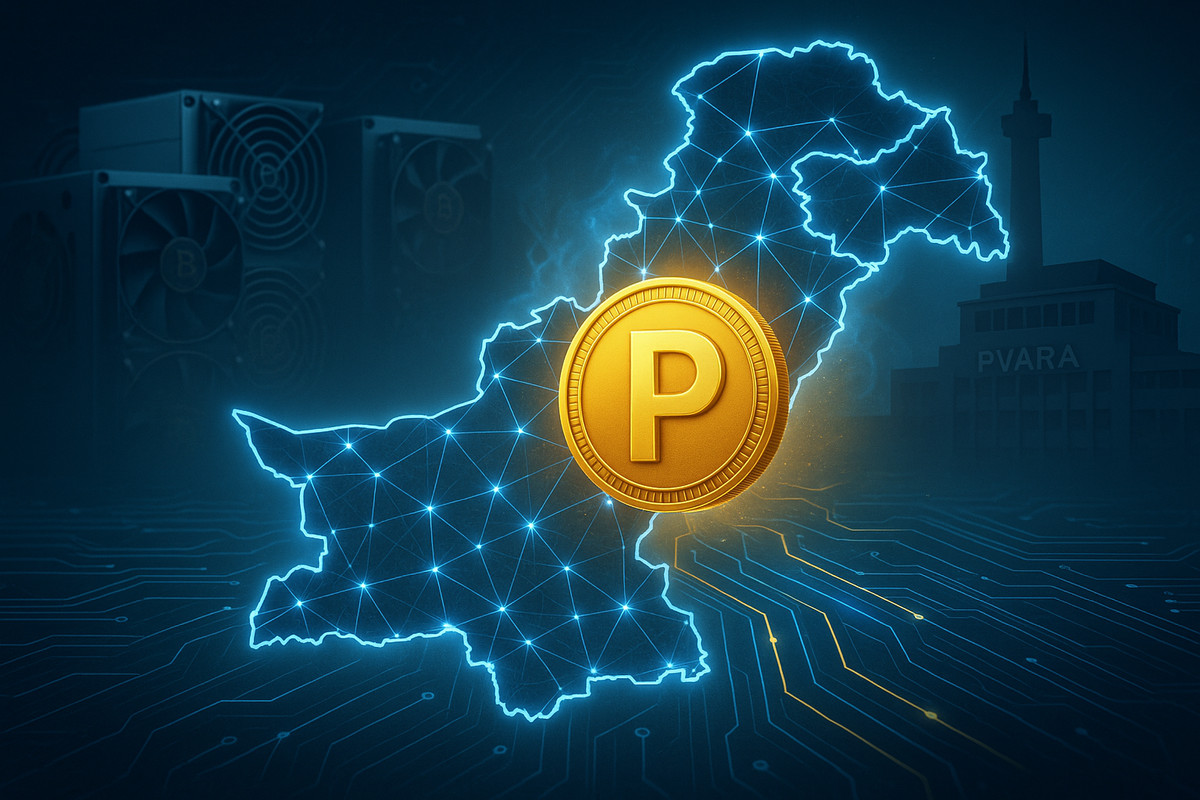
Pakistan’s digital asset landscape is undergoing one of its most significant transformations yet. While speaking at Binance Blockchain Week in Dubai, Pakistan’s crypto leadership signaled that the country is preparing to launch its own sovereign stablecoin, a move that could potentially reshape the financial architecture of Pakistan.
While headlines quickly suggested certainty, a deeper look reveals a more nuanced picture, one that includes regulatory gaps, global scrutiny, and ambitious national plans that are still evolving.
The statement that Pakistan will “definitely launch” a sovereign stablecoin has generated strong reactions across the industry. Yet, despite the confidence expressed on stage, no official draft, white paper, or legal framework has been released by PVARA, the Ministry of Finance, or the State Bank of Pakistan. This means the idea remains an intent, a serious one, but not yet a fully structured policy.
For an economy dealing with high inflation, foreign-exchange pressure, and reliance on external financing, introducing a nationally issued stablecoin requires layers of transparency, reserve backing, and investor protection before it can move forward.
The recent transition of Bilal Bin Saqib from Special Assistant to the Prime Minister (SAPM) to functioning solely as Chairman of PVARA also triggered unnecessary speculation about political instability. In reality, his shift occurred due to regulatory rules restricting dual roles, not due to any dismissal from his ministerial functions.
His continued leadership of PVARA suggests that the government still views digital assets, Bitcoin mining, and tokenization as strategic sectors for economic modernization.
Pakistan’s interest in digital assets did not develop overnight. Earlier in the year, the government announced an ambitious 2,000-megawatt allocation for Bitcoin mining and AI data centers. Simultaneously, Pakistan introduced the concept of strategic Bitcoin reserves, a forward-looking move signaling long-term confidence in Bitcoin as a global asset.
Combined with PVARA’s emergence as the country’s first dedicated virtual asset regulatory authority, Pakistan has been laying silent but significant groundwork toward integrating blockchain into its national infrastructure.
However, despite these bold steps, the regulatory framework for crypto in Pakistan is still pending. Industry participants, miners, exchanges, and Web3 builders are all waiting for clarity. The delay raises important questions: Is Pakistan waiting for signals from the IMF? Is FATF reviewing Pakistan’s digital asset compliance posture? Are global institutions cautious about Pakistan entering the stablecoin and Bitcoin-mining ecosystem too aggressively? These factors matter because Pakistan’s economic environment is deeply interconnected with international oversight.
Any sovereign stablecoin issued by Pakistan would also need to align with global AML/CTF standards, ensure transparent reserve backing, and establish redemption mechanics that comply with both local and international laws. Without these components, a state-backed stablecoin risks being rejected by global markets, or worse, triggering macroeconomic instability at home. This makes the timing of Pakistan’s regulatory framework crucial, and it explains why authorities may appear cautious rather than rushed.
Bitcoin mining in Pakistan, one of the most discussed components of the country's new digital asset strategy, will also be directly affected by the regulatory timeline. Until PVARA finalizes licensing requirements for miners, energy rules, taxation, and reporting standards, industrial-scale mining cannot move forward. Investors and mining-as-infrastructure companies are preparing, but none can deploy capital without legal guarantees.
All of this ties back to the larger narrative: Pakistan is signaling a strong intention to join the global crypto economy, but it wants to do so with institutional backing, international compliance, and long-term sustainability. In other words, the ambition is big, but the execution must be measured.
If Pakistan manages to launch a compliant sovereign stablecoin, regulate Bitcoin mining transparently, tokenize real-world assets through PVARA, and secure international alignment, the country could position itself as a regional hub for Web3 innovation.
But until official frameworks are published, the developments remain in their preparatory phase. The direction is clear, the momentum is real, but the final shape of Pakistan’s crypto future will depend on regulatory precision rather than public statements.
For now, the most important thing for the industry is understanding that Pakistan has not stepped back. The leadership is still in place, Bitcoin mining plans are still active, PVARA is still functioning, and the sovereign stablecoin remains on the roadmap, just not officially structured yet. Once the regulatory framework is released, it will define how quickly (and how safely) Pakistan transitions into a fully regulated digital asset economy.