Buying Bitcoin in Pakistan: The Platform Is Vetted, Not You
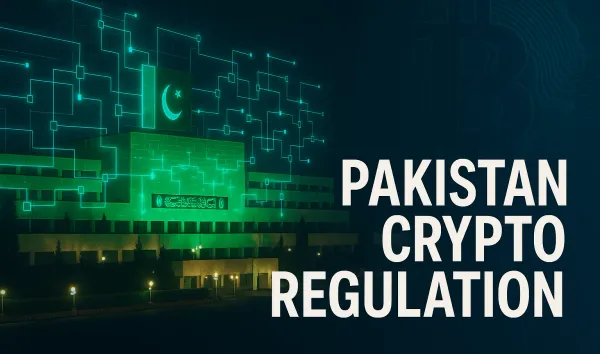
Nothing in Pakistani law asks a crypto buyer to register. The checks fall on the exchange — and no exchange holds a Pakistani licence yet.


If you are in Karachi or Lahore and want to buy Bitcoin, the first question most people ask is whether they are allowed to. They are: Pakistan's Virtual Assets Act, 2026 binds virtual asset businesses and issuers, not the individual who holds or buys, as our breakdown of the Act's scope sets out in full. No licence, registration or filing falls on you for buying crypto for yourself.
That answer, though, is about you. The harder and more useful question is about the other side of the trade: which platform is actually accountable to a Pakistani regulator, and what will it ask of you before it takes your money.
The identity checks are done to you, not by you
Every exchange operating under Pakistan's pre-licence regime is required to verify its customers. The obligation is Regulation 9 of the PVARA No Objection Certificate Regulations 2025, headed "Customer Due Diligence (CDD)": "Each Applicants shall implement CDD procedures that comply fully with AMLA 2010 and all applicable rules issued under it."
What those procedures have to cover is spelled out. Regulation 9.2 requires "identification and verification of all customers", assessment of "the nature and purpose of the business relationship", "understanding and, where appropriate, verification of sources of funds and wealth", and "ongoing monitoring and periodic updating of customer profiles". Regulation 9.3 sets the timing: "CDD must be completed before the Applicant provides any AML Registered Service."
In practice that is why a platform asks for your CNIC, a selfie, sometimes a proof of address, and occasionally where the money came from — and why it can freeze an account mid-use to refresh those records. Those demands come from the exchange discharging its own obligation. They are not something a Pakistani regulator asks of you directly, and satisfying them gives you no status of your own.
No platform holds a Pakistani licence yet
Nobody is licensed. PVARA's licensing page still describes its requirements as ones applicants "will need to meet ... to obtain a VASP license when full licensing becomes available" — future tense, checked again on 5 September 2026.
What does exist is a narrower pre-licence status. PVARA's news page carries an announcement dated 12 December 2025 that it "has granted no objection certificates (NOCs) to major global cryptocurrency exchanges including Binance and HTX". An NOC is a step, not an endpoint: under clause 2.2 of the NOC Regulations, issuing one "shall constitute (i) approval for the Applicant's AML Registration on the goAML portal; and (ii) permission for the Applicant to proceed with incorporation of its local entity in Pakistan". Approval to register is not registration, and neither is a licence.
Bybit, KuCoin and OKX each appear zero times on those two PVARA pages, fetched 5 September 2026. That is a scoped absence covering those pages only, not a finding about the companies. And there is no register to check against: the Act requires PVARA to publish one once licences exist, but pvara.gov.pk/licensees and pvara.gov.pk/register both still return 404. Our exchange status page tracks this as it moves; the first-round application deadline fell today.
The rupee leg is the part with no public answer
Buying is two transactions: acquiring the crypto, and moving rupees. The second is where the record thins out. Whether a Pakistani bank will send a transfer directly to an exchange is not settled by any State Bank instrument this desk has been able to obtain and read — and rather than tell you what banks are doing on the strength of a document we cannot produce, we will say plainly that we do not have it.
What we can say is that most PKR-to-crypto conversion in Pakistan currently runs peer-to-peer: trading with another user and settling the rupee leg outside the platform. That route is not a regulated category. Neither S.R.O. 1419(I)/2026 nor S.R.O. 1420(I)/2026 uses the words "P2P" or "peer-to-peer" anywhere. It is a space the framework does not name — which is neither clearance nor prohibition, and does mean your protection is whatever the platform's own escrow gives you. We have documented exactly what Binance P2P's escrow holds and what releases it, including the fact that release depends on a seller's deliberate click rather than any timer, because that mechanism is the whole of the safety net on that route.
What would change this answer
One event: PVARA issuing a first full VASP licence and standing up the register the Act requires. Until then "which exchange is licensed in Pakistan" has no answer, only NOC grants — and a buyer's practical choice is made on the platform's own record rather than on any Pakistani authorisation.
Sources
- PVARA No Objection Certificate Regulations 2025 (PVARA/REG/AML-REG/2025-1), Regulation 9 and clause 2.2 — https://pvara.gov.pk/documents/PVARA%20NO%20OBJECTION%20CERTIFICATE%20REGULATIONS.pdf, fetched 5 September 2026
- PVARA licensing page — https://pvara.gov.pk/licensing, fetched 5 September 2026
- PVARA news page — https://pvara.gov.pk/news, fetched 5 September 2026 (announcement dated 12 December 2025)
- Virtual Assets Act, 2026 (Act No. XIII of 2026), s.2(1) and s.21(4) — quoted in full in our legal-status piece, not re-derived here