Pakistan told the UN it chose the table. What's on it at home?
Pakistan's finance minister and its crypto regulator spent UN week pitching a regulated digital-asset future. The regulator then gave Harvard a test for it: "The public experience is the test." We apply it.

Key takeaways
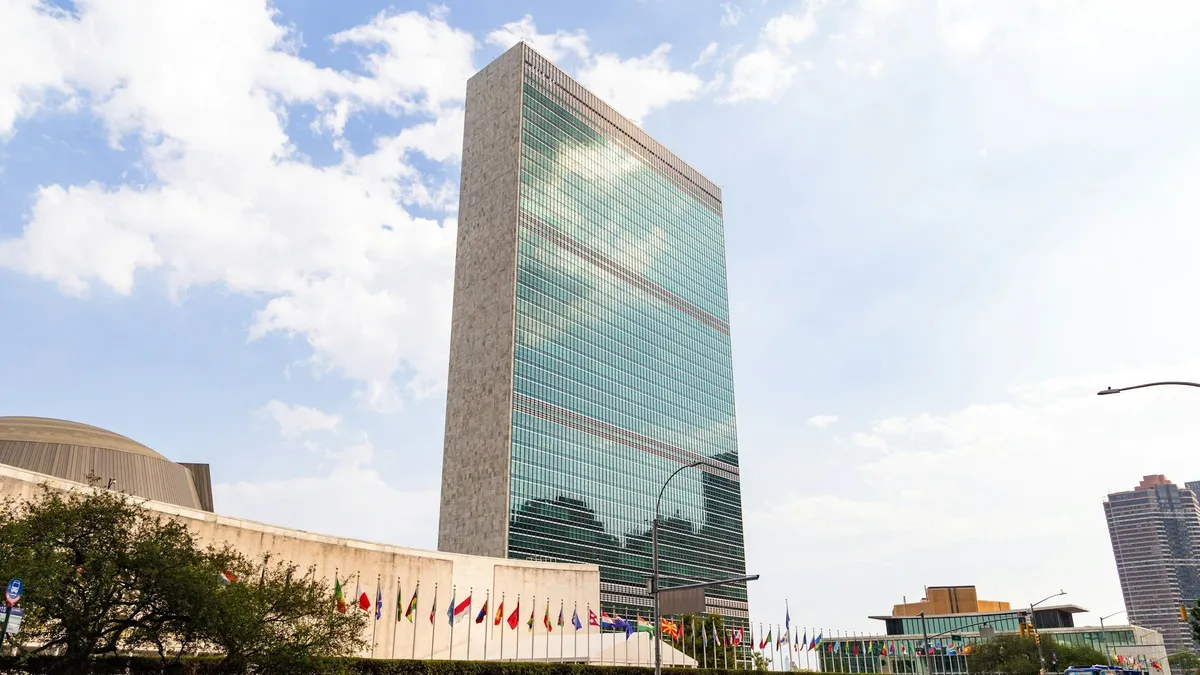
- At UN events in New York from 21 to 24 September 2026, Finance Minister Muhammad Aurangzeb presented Pakistan as moving to a regulated virtual-assets framework.
- PVARA chairman Bilal Bin Saqib told a UN side event on 22 September that Pakistan "has chosen the table", and told a Harvard conference on 29 September that "the public experience is the test".
- At home, the law and the licensing regulations exist. As of 30 September 2026, no licence has been issued and no public register of licensees exists.
- A report of the UN speech put Pakistani crypto users at "more than 40 million". It did not name the index, and we could not trace the figure.
Pakistan in the Global Conversation is a weekly column on what is said about Pakistani crypto abroad, set beside the record at home. We report statements; we do not endorse them.
What was said in New York
The finance minister. On 21 September, at the UN's Digital Cooperation Day session on "Blockchain and the Tokenized Future", Muhammad Aurangzeb "highlighted Pakistan's transition towards a regulated virtual-assets framework", according to the Ministry of Finance's own account (PR No. 643). He said tokenisation "must address real economic needs, including cheaper remittances, SME financing, sovereign debt and broader financial access".
Three days later (PR No. 645) the ministry reported him "noting the widespread adoption of virtual assets" and outlining "Pakistan's work on legislation, oversight and licensing", with uses "beyond cryptocurrency, including cheaper and more seamless remittances and the potential tokenization of public debt and real estate".
The regulator. On 22 September, Bilal Bin Saqib, who chairs PVARA, gave the keynote at a Social Business, Youth and Technology Forum held during the General Assembly. Geo News quoted him: "For too long, the Global South has been on the menu. Pakistan has chosen the table, with our own pen, writing our own destiny." And: "We do not want to be takers of this technology. We want to be makers of it."
The same report describes Pakistan's path as the passage of the Virtual Assets Act, a regulatory sandbox and the launch of licensing regulations.
What was said at Harvard
On 29 September, at the Harvard Islamic Finance Conference, Bin Saqib drew a line between writing rules and making them work. 24 News quoted him: "The rulebook is a beginning. The public experience is the test." The question, he said, "is not simply whether a technology works, but whether people can use it with clear rights, understandable risks and somewhere to turn when things go wrong."
That is a fair test, and it is his. So here is the public experience, as a reader in Pakistan can check it today.
The record at home, on 30 September 2026
| What was described abroad | What a reader can verify |
|---|---|
| A law | In place. The Virtual Assets Act, 2026 has been in force since March 2026 |
| Licensing regulations | In place. Notified on 21 August 2026 |
| A regulatory sandbox | Rules exist. We covered what they allow and exclude |
| Licensed exchanges | None yet. PVARA's licensing page still refers to "when full licensing becomes available" |
| A public register of licensees | Not published. The regulations require one; pvara.gov.pk/licensees and /register return "not found" |
| "Somewhere to turn when things go wrong" | A page exists. PVARA's site has a Grievance Portal for complaints about fraud and unlicensed providers. We have not tested how complaints are handled |
| News from the regulator | Sparse. The newest item on PVARA's news page is its December 2025 report on the Binance and HTX certificates |
The rulebook is real, and that is more than Pakistan had a year ago. The public experience is thinner: no licence to look up, no register to check a platform against, and no published count of who applied by the 5 September deadline.
The number we could not trace
Geo's report says "independent global adoption indices place the number of Pakistani virtual asset users at more than 40 million". It names no index and gives no year. We could not find the source of the figure in that report, so we are not repeating it as fact. If PVARA publishes where it comes from, we will add it.
What this means for Pakistani users
- Nothing said in New York changes what you can do today. No exchange is licensed, and none of the accounts of these speeches that we read mentions a date for the first licence.
- Tokenised government debt and property are proposals. The ministry's own wording is "potential". We explained what the law currently allows on property tokens.
- The regulator has set its own benchmark. Clear rights, understandable risks and somewhere to turn are things a reader can hold PVARA to.
What we're watching
- The first PVARA licence, and the register that should list it. Our licence tracker will record both.
- Whether PVARA publishes the source for its user figures.
- The next international appearances by either official, and whether they come with dates.
Sources
- Ministry of Finance, press releases: PR No. 643 (21 September 2026) and PR No. 645 (24 September 2026).
- Geo News, "At UNGA session, crypto czar urges fairer financial future for Global South", 22 September 2026.
- 24 News HD, "Bilal Bin Saqib addresses Harvard Islamic Finance Conference", 29 September 2026.
- PVARA, Licensing, News & Updates and Complaints, all checked 30 September 2026.
- Pakistan Virtual Asset Services Regulations, 2026, regulation 9(6), on the public register.