Pakistan's $41.6bn Remittance Subsidy Just Ended
SBP scrapped the scheme that made remittance transfers free, effective 1 July 2026. For the use case that drives most Pakistani crypto activity, the maths just changed.

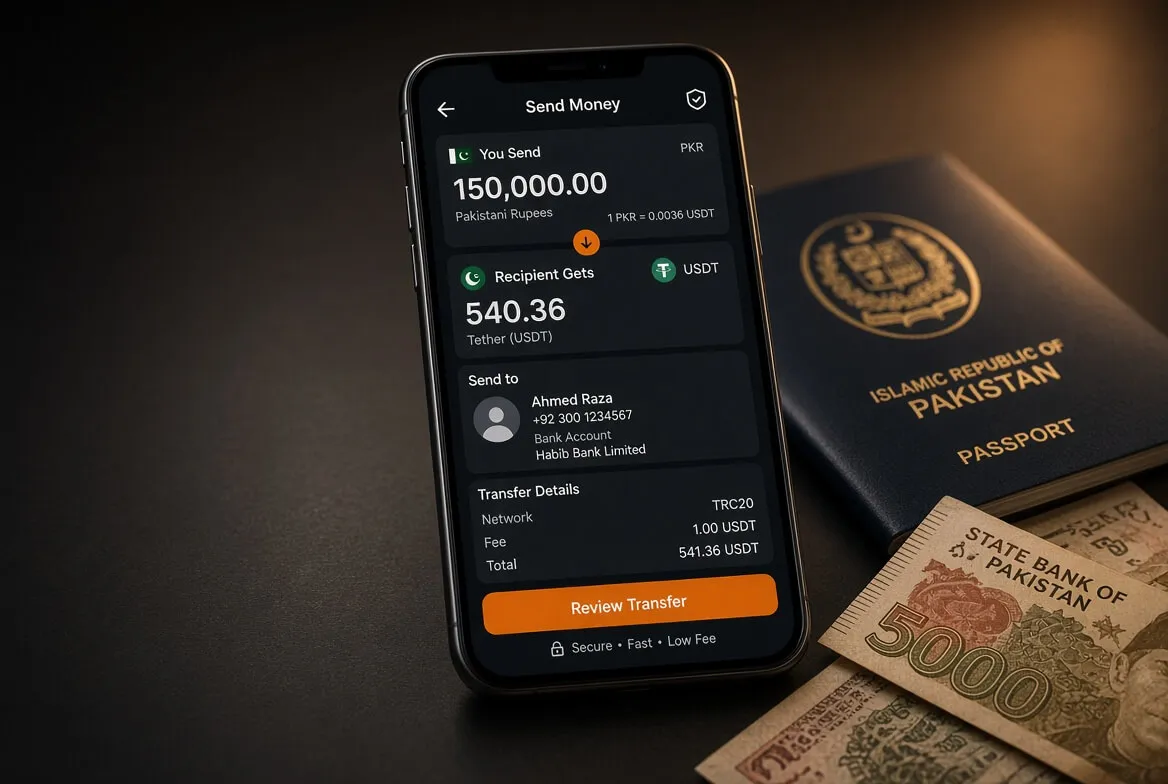
Pakistan received a record $41.6 billion in workers' remittances in FY26, up 8.6% on the $38.3 billion of FY25. May 2026 alone brought in $4.25 billion — the largest single month in the country's history.
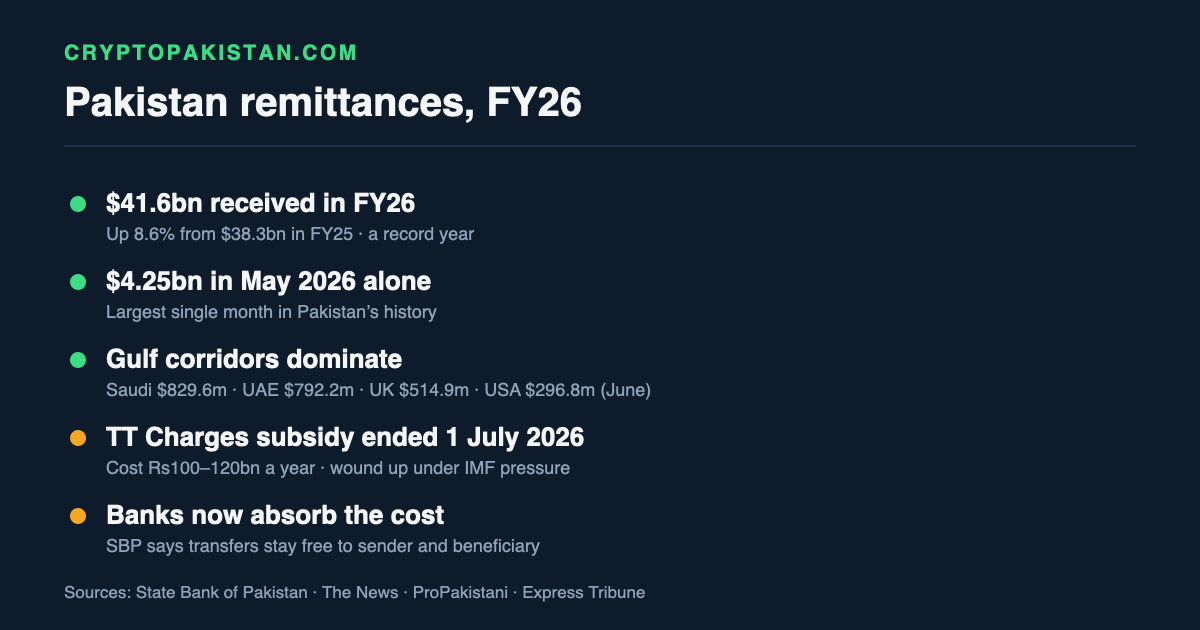
On 1 July 2026, the State Bank discontinued the Telegraphic Transfer Charges Incentive Scheme — the reimbursement mechanism that let banks waive transfer fees on eligible remittances so the transaction cost nothing to either sender or recipient. The scheme was costing an estimated Rs100–120 billion a year, and it was wound up under pressure from the IMF.
Those two facts belong in the same article, and almost nobody has put them there.
Why this is a crypto story
Remittances are not a side plot in Pakistani crypto — they are the main plot. Analyses of Pakistani crypto activity consistently put remittances and savings, not speculative trading, at the centre of real usage. The formal channel's competitive advantage has been that it was cheap, fast enough, and free at the point of transfer.
The subsidy is what made "free" possible. SBP has instructed banks to keep facilitating eligible remittances without charging senders or beneficiaries, but the reimbursement is gone — which means the institutions are now absorbing a cost that the state used to carry. That is a materially different incentive structure.
The three ways this can go
- Banks absorb it quietly. Nothing visible changes for overseas Pakistanis. Margin pressure sits inside the banking system.
- Costs resurface as spreads. Not headline fees, but a slightly worse exchange rate on the receiving end. This is the historically common route, and it is the hardest for a sender to detect.
- Volume shifts to cheaper rails. Some of it to hundi and hawala, which is the outcome the incentive scheme existed to prevent — and some to stablecoins.
The timing is the story
This lands in the same window that PVARA opened the first phase of Asset-Referenced Token issuance — the statutory category for tokens representing claims on real underlying assets. Currency-pegged stablecoins sit in a separate category under the Act — Fiat-Referenced Tokens. Pakistan is removing a subsidy from the formal remittance corridor at precisely the moment it is building a legal framework for the instruments that compete with it.
We do not think that is deliberate coordination. But the effect is real: the relative cost advantage of the regulated banking channel narrowed on 1 July, and the regulatory status of the alternative improved in the same season.
What this means for Pakistani users
- If you receive remittances, watch the rate, not the fee. A "zero fee" transfer can still cost you several percent in the exchange rate applied. Compare the PKR you actually receive against the interbank rate on the day.
- Nothing has been announced that changes what you pay today. SBP has told banks to keep the service free at the point of transfer. Treat any bank that starts charging as a change worth questioning.
- Stablecoin remittances are not yet a regulated route. No VASP in Pakistan holds a full licence. Using USDT to move money home is not illegal, but it is unsupervised — there is no regulator to complain to if a platform fails you.
- Hundi and hawala remain the real competitor, and they are outside the formal system entirely. The policy question is whether removing the subsidy pushes volume there.
The corridors that matter
In June 2026, the largest sources were Saudi Arabia ($829.6m), the UAE ($792.2m), the UK ($514.9m) and the USA ($296.8m). The Gulf corridors dominate — and the UAE, notably, has the region's most developed regulated stablecoin framework. If a compliant crypto remittance corridor into Pakistan emerges, that is the most likely place it starts.
What we're watching
Whether monthly remittance inflows soften in the first quarter after the scheme ended, whether any bank reintroduces visible charges, and whether PVARA's ART framework produces an actual PKR-referenced or reserve-backed product aimed at this corridor. We will report the monthly SBP figures against the pre-July baseline rather than in isolation.
Sources
- State Bank of Pakistan — Economic data, workers' remittances (primary)
- The News — FY26 remittances hit $41.6bn, 8.6% yearly growth
- ProPakistani — SBP ends remittance incentive schemes after IMF pressure
- The Express Tribune — SBP scraps remittance fee incentive scheme
- PVARA — VASP Licensing, including Asset-Referenced Token issuance (primary)